Last year I couldn't decide whether to get a GoPro or a Contour action camera, so in the spirit of MTO, I did what any of us would do- I got both.
The thing is, each has their strengths and I wanted each of them for their good points. Since then I have been doing my best to minimize the shortcomings while maximizing the strengths. Since I enjoy watersports (kayaking, body boarding and snorkeling, not the other "watersports" you see on the 'net!

) I appreciate lanyard holes, tie downs and other securing methods on my equipment. In fact, I have two rules when kayaking:
Rule #1- Always have a knife.
Rule #2- If it's not secured it's not yours.
The Contour camera has a lanyard hole cut into the housing as well as the waterproof dive case, so no worries there, and as an added bonus, the Contour floats when in it's dive case. The GoPro has no lanyard rings on it or it's waterproof case, and better yet, it sinks like a stone. My guess is this is part of GoPro's plan, so when you are out wake boarding or windsurfing and your camera falls in the drink you have to get a new one.

The good news is that there's a kit that replaces the black plastic lens ring on the waterproof case with a machined and anodized aluminum one with a built in lanyard ring, and the better news is that the kits I ordered (I have two GoPros) are here. So here, step by step is the amazing story about me loosening and re-tightening twelve tiny screws,
all by myself!
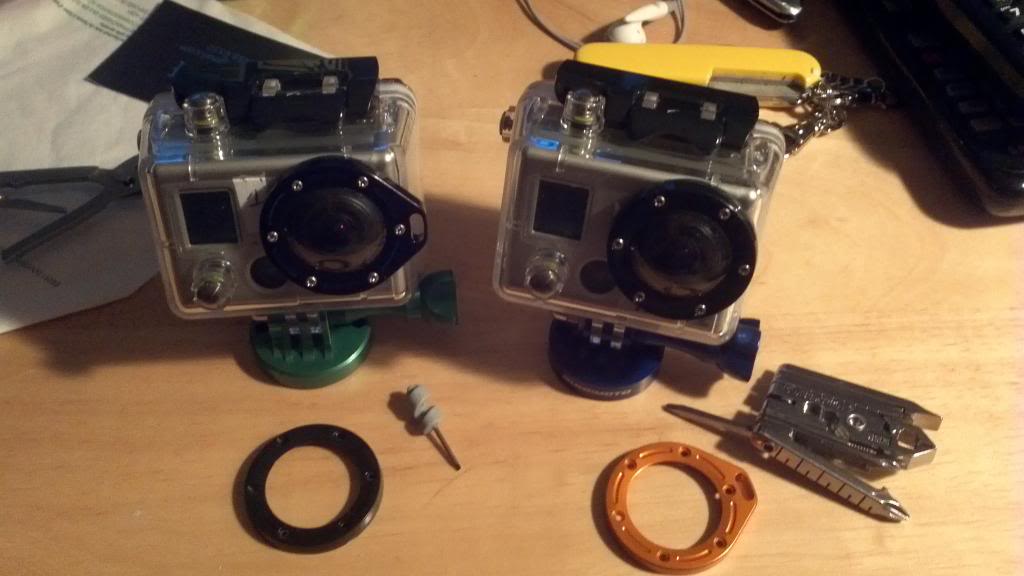
I lied- I am actually only going to show me removing and replacing
six screws as I only started photographing after I'd done the first one.

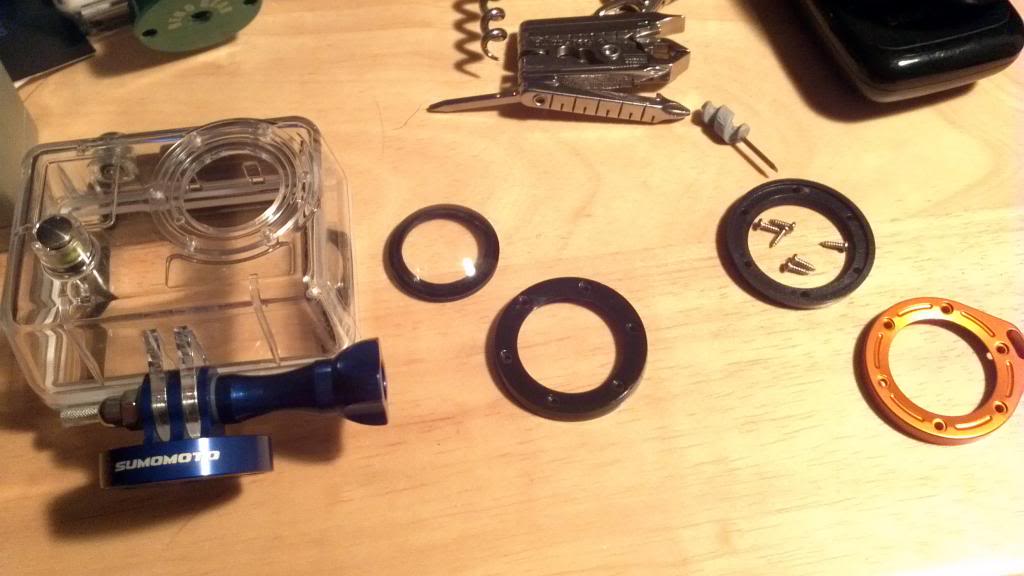
You can see the factory lens ring on the right and the replacement on the left.
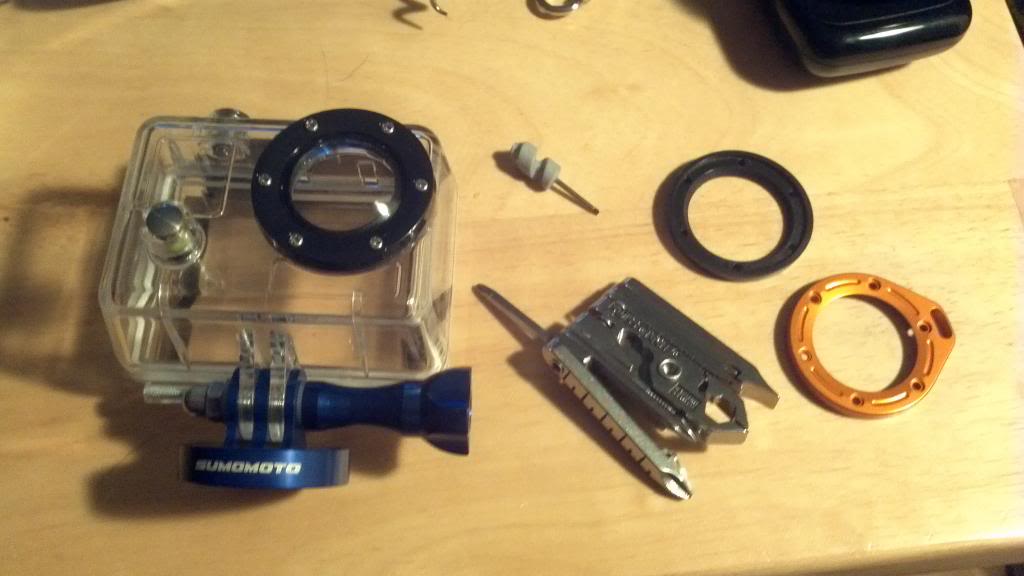
I used the small Phillips on the Swiss Tech Micro Technician to loosen the screws initially, but the ergonomics of it made it almost impossible to unscrew the screws all the way, so the Vic eyeglass screwdriver filled in once the screws were loosened enough.
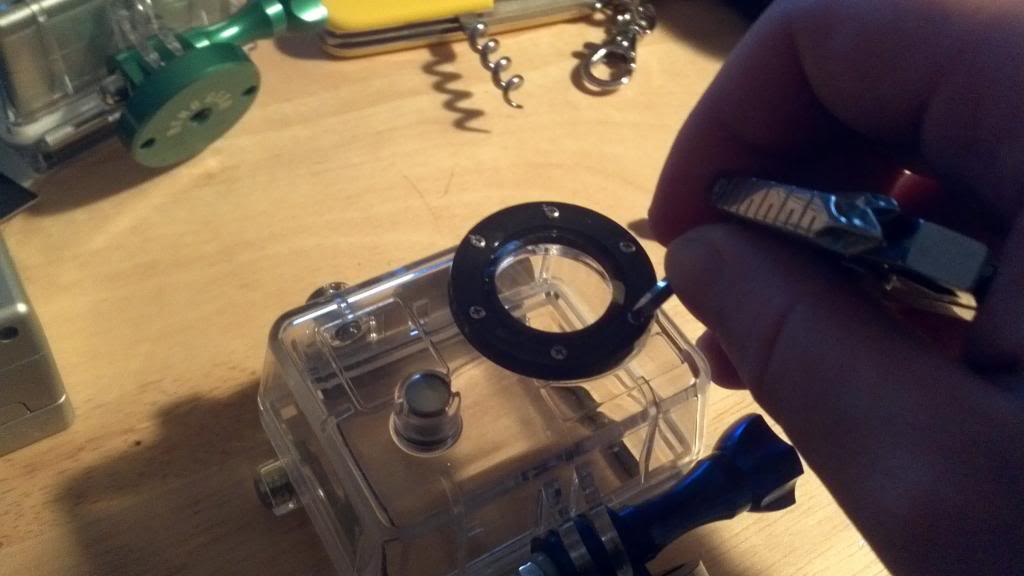
Unfortunately the eyeglass screwdriver couldn't handle the torque needed to loosen the screws or I would have used it and not bothered with the Micro Technician.
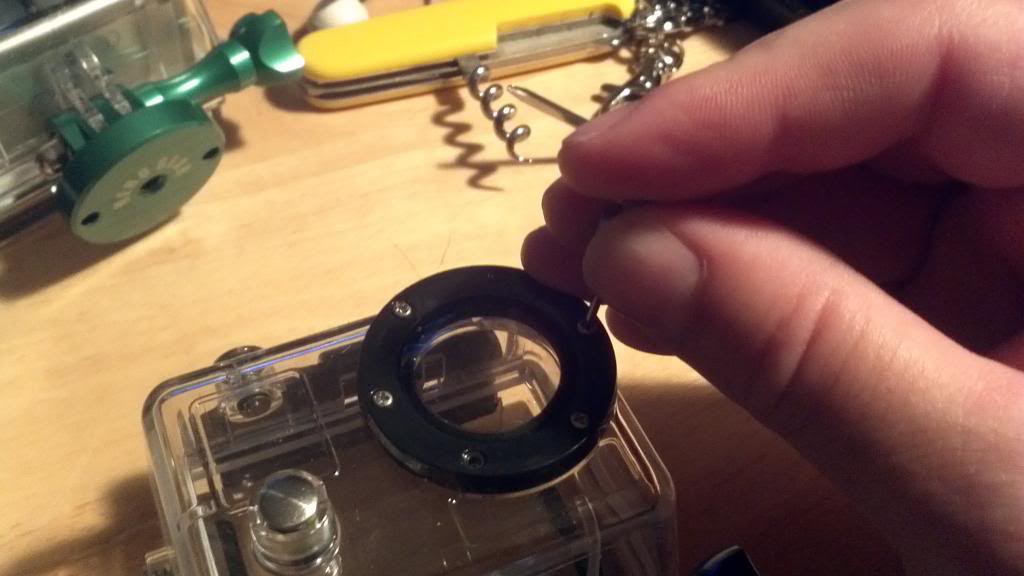
Eventually I succeeded in getting the lens ring and lens off- those teeny screws are actually quite long (relatively speaking!) and finely threaded so it feels like you are twisting for hours to get them out!
Of course getting them out is only half the problem- once the replacement ring is in place the screws need to be driven back in!
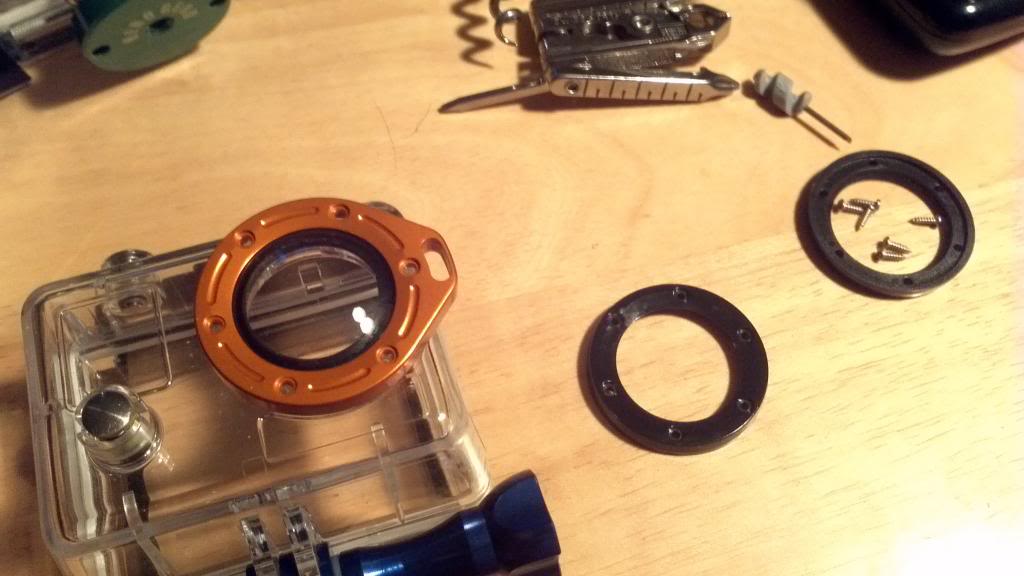
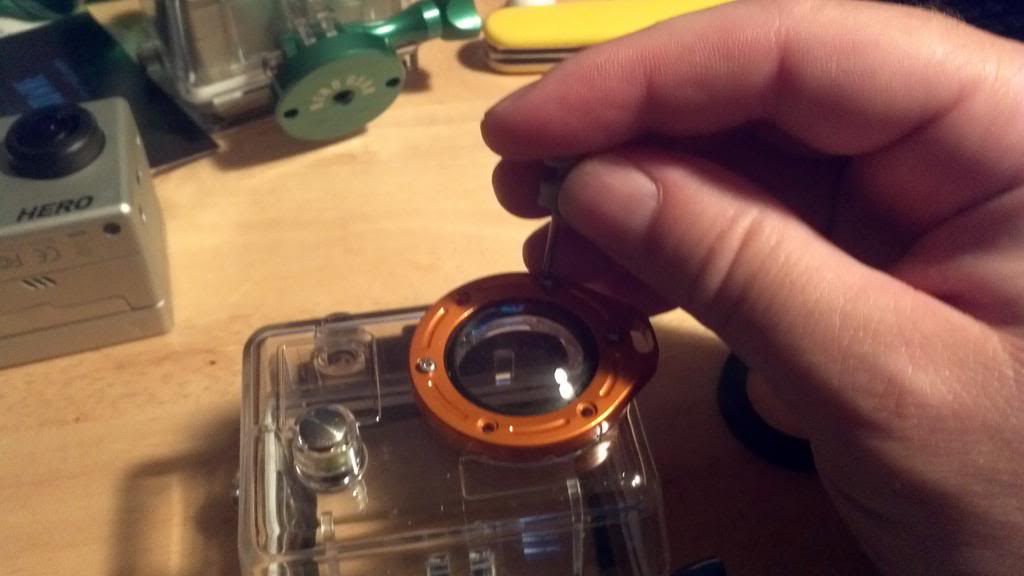
This was basically done the same way I had taken them out- most of the driving done with the Vic, then the Swiss Tech takes over for the heavy part. Note that I am criss-crossing the screws so that the lens gets screwed down flat, similar to changing a car tire. I did that when I took them out too. I don't know if it was necessary, but I figured it couldn't hurt and it makes sense to seat the ring as flat as possible to maintain water tightness.
And there you have it- both cameras now have a securing point. Up until now I'd always tied down the tripod and hoped the camera didn't come apart from the tripod- imagine how upset you'd be when you lost a $200 camera but saved the $6 tripod!
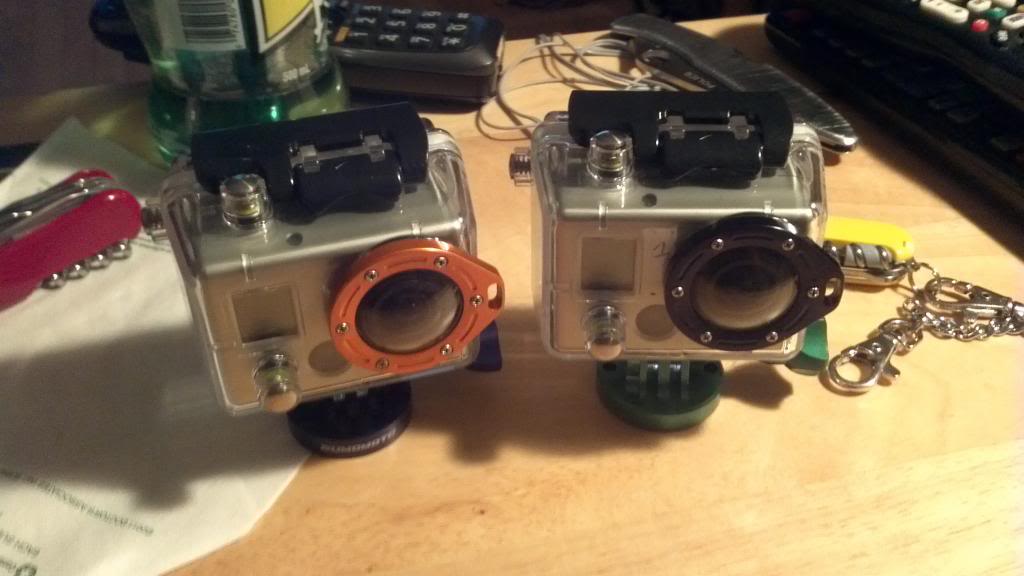
Now I won't have to worry about it as I now have a place to tie the wrist strap floats I have for it!
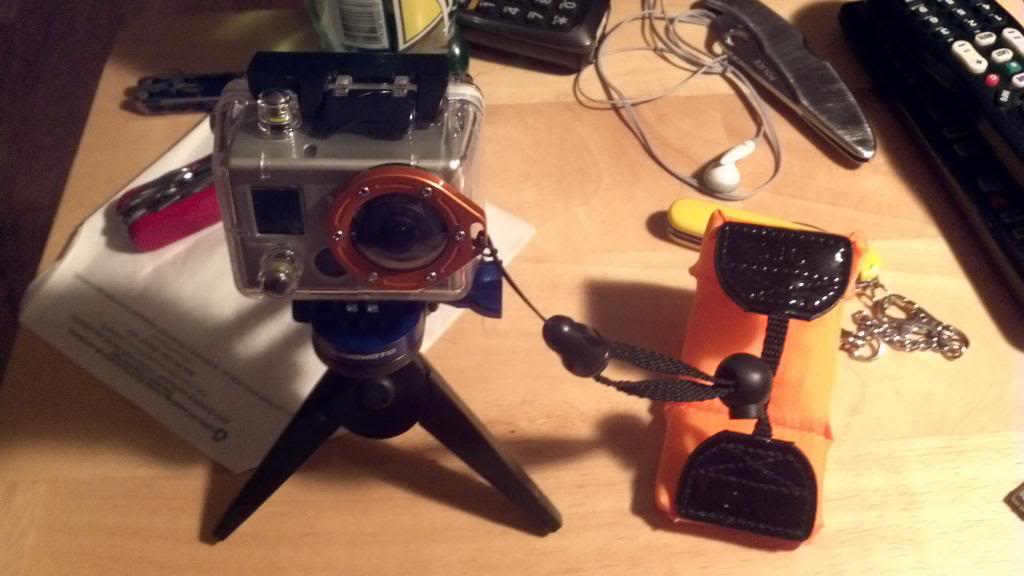
And yes, I have tested it- the float will keep the GoPro with WiFi backback, waterproof case and tripod at the surface.
Def



 Donations
 Community Links